

Food trends move fast—but understanding why they work is what truly elevates your cooking. If you’re here, you’re likely looking to explore the latest culinary buzz, master essential food fundamentals, and discover how global flavors and ingredient fusion techniques can transform everyday meals into something unforgettable.
This article dives into the forces shaping modern cuisine, from the rise of street food influence on fine dining to smart flavor enhancement hacks that chefs quietly rely on. We break down not just what’s trending, but how and why these techniques succeed—so you can apply them confidently in your own kitchen.
Our insights are grounded in deep culinary research, global food studies, and hands-on experimentation with flavor layering, texture balance, and cross-cultural ingredient pairing. Whether you’re refining classic dishes or experimenting with bold new combinations, you’ll gain practical, trustworthy guidance designed to sharpen your palate and expand your creative range.
The sizzle of a griddle cracks through the air, steam curling from a noodle cart like a stage effect. Chili smoke stings your eyes; citrus and char cling to your clothes. Compare that to white-tablecloth quiet, where flavors often whisper. Diners now hunger for bold, unapologetic taste—food that crunches, drips, and shouts. This analysis argues that street food influence reshaped menus and home kitchens, because heat, fat, acid, and texture hit faster and truer. Consider:
- Fermented sauces layer umami.
- Open-flame searing builds bitter-sweet crust.
Chefs translate curbside instinct into tasting menus, while home cooks chase that electric, messy joy nightly.
A Passport on a Plate: The Global Flavor Revolution
Ever order “authentic” takeout only to realize it tastes suspiciously… toned down? (Why is everything sweet?) That frustration is exactly why street food has become the most trusted pipeline to real, regional flavor. It bypasses the watered‑down, “westernized” restaurant versions and delivers dishes the way they’re actually eaten—messy, bold, unapologetic.
Take birria tacos. Once a regional specialty from Jalisco, they exploded into the mainstream thanks to taco trucks serving them dripping with consommé. Or elote, grilled corn slathered in crema, chili, and cotija—now a festival staple far beyond Mexico. Bánh mì followed a similar path: Vietnamese street vendors perfected the balance of pickled vegetables, pâté, and crusty baguette long before trendy cafés caught on.
Some critics argue that once these foods go mainstream, they lose authenticity. That’s fair—mass production can dull flavor. But without street vendors introducing them first, many diners would never have tasted them at all. Accessibility matters.
Food trucks and stalls democratize cuisine. You don’t need a plane ticket to experience gochujang’s fermented heat, yuzu’s floral citrus pop, or aji amarillo’s sunny spice. These ingredients entered everyday kitchens largely through street food influence, not white‑tablecloth dining.
Yes, trends can commercialize culture. But they also spark curiosity. And sometimes, one perfect bite from a paper tray is all it takes to open a world.
Unlocking Creativity: Ingredient Fusions Born on the Street
The Street as a Culinary Laboratory
The sidewalk is one of the most honest test kitchens in the world. With low overhead and relentless competition, vendors can’t hide behind branding or décor. If a dish doesn’t sell by noon, it’s gone by night. That pressure fuels experimentation. A tweak to a marinade, a new topping, a faster sear—innovation happens in real time. I can’t say every breakthrough is intentional; sometimes it’s improvisation born from running out of an ingredient (necessity is the best sous-chef).
The Birth of Fusion
Take the Korean taco popularized by Kogi. Was it a calculated culinary strategy or simply a reflection of Los Angeles’ cultural overlap? Probably both. Urban neighborhoods create daily cross-pollination, and fusion becomes less trend, more inevitability. Still, some argue fusion dilutes tradition. That’s fair. Yet others see it as evolution—food mirroring lived experience.
Flavor Enhancement Hacks
Street vendors often rely on three core tactics:
- Maximize flavor with minimal ingredients – bold marinades, high-heat cooking.
- Master the sauce – one great sauce can define a dish.
- Leverage texture contrast – think crispy chili oil over soft noodles.
Pro tip: If you’re cooking at home, prioritize acid and crunch before adding complexity.
From the Street to the Supermarket
It’s hard to quantify exactly when street food influence became mainstream, but grocery shelves now echo those mashups—gochujang mayo, birria ramen kits, globally inspired snack mixes. What starts curbside often reshapes how we cook at home (and what we crave next).
The Food Truck to Michelin Star Pipeline
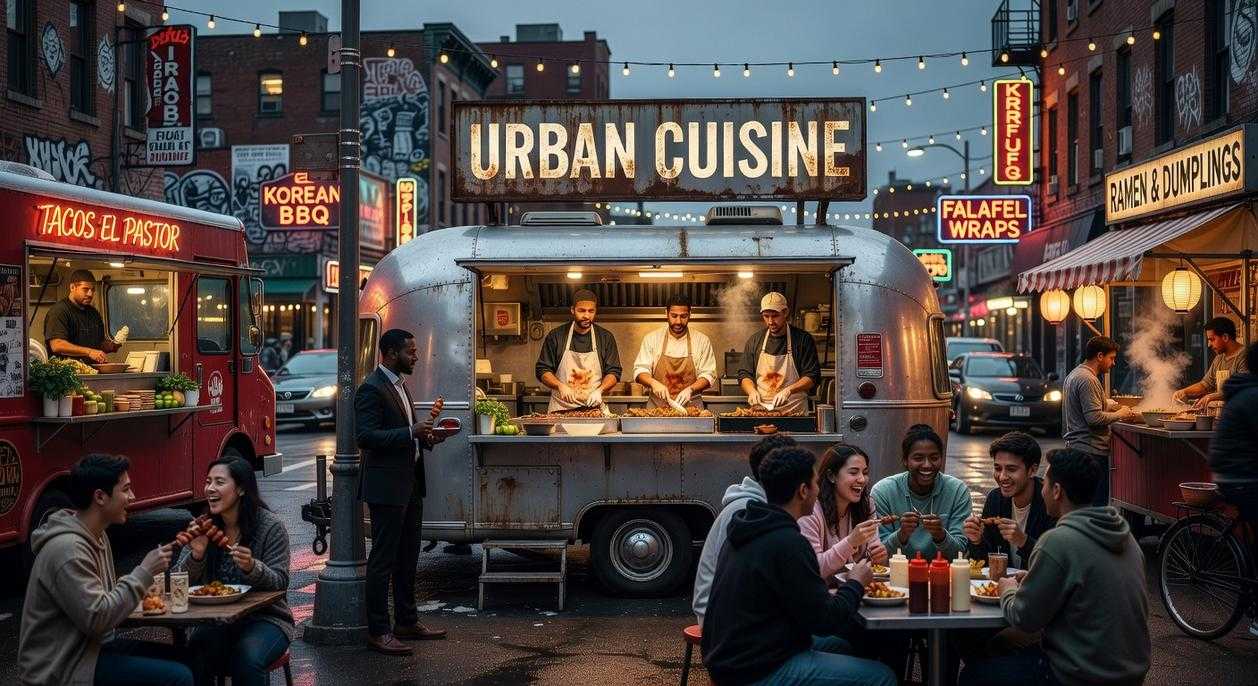
White tablecloths used to signal “serious” food. Now? A taco can change your life.
Across major cities, classically trained chefs are elevating so-called “low-brow” dishes—turning shawarma, bao, and fried chicken into tasting-menu stars. Elevating the ‘low-brow’ means applying fine-dining techniques—precision plating, rare ingredients, advanced culinary methods—to humble staples. Think foie gras-stuffed dumplings or truffle-dusted elote. The benefit for diners? You get comfort and craftsmanship in the same bite.
Then there’s deconstructing the classics. A deconstructed som tam might separate green papaya ribbons, chili gel, and lime foam into artful components. Poutine appears with hand-cut duck-fat fries, short-rib jus, and cheese curds made in-house. (Yes, your late-night snack just got a sommelier.) These reinterpretations let you experience familiar flavors in entirely new textures and forms—expanding your palate without abandoning nostalgia.
The rise of the chef-driven fast-casual concept is another win. By focusing on one dish done exceptionally well—ramen, hot chicken, or tacos—chefs deliver Michelin-level technique at accessible prices. This model, inspired by street food influence, offers quality without ceremony. For diners, that means shorter waits, lower costs, and unforgettable flavor.
Critics argue gourmet should remain exclusive. But shifting perceptions prove otherwise. As explored in top culinary trends shaping modern kitchens this year, excellence now hinges on creativity, sourcing, and execution—not linen napkins.
The takeaway? Great food is defined by intention, not setting. And that’s deliciously democratic.
Redefining the Dining Experience: Fast, Casual, and Communal
The modern dining shift didn’t start in a boardroom. It started curbside. The street food influence reshaped service models by proving that speed and personality can coexist (and that no one really misses waiting 40 minutes for water). Counter-service and fast-casual layouts now prioritize direct interaction, streamlined menus, and kitchens that move like choreography.
• Visual first bites: If it’s not camera-ready, it’s not ready. Bright sauces, stacked layers, and dramatic garnishes exist because diners eat with their phones first.
• Communal energy: Long tables, food halls, and open kitchens recreate that shoulder-to-shoulder buzz—minus the traffic noise.
Communal dining turns strangers into temporary tablemates. It’s efficient, social, and just chaotic enough to feel fun.
The legacy forged in the streets is no passing craze; it is a permanent shift in how we taste, smell, and share food. First, global authenticity arrived sizzling—chilies crackling in oil, cumin perfuming the air—reminding us that flavor has roots. Then came fearless fusion, where tacos met kimchi and sparks flew (sometimes literally). Meanwhile, dining loosened its collar, trading white tablecloths for paper trays and laughter. Critics may call it hype, yet the street food influence keeps proving otherwise. Ultimately, the curb remains cuisine’s loudest, liveliest laboratory—the raw, beating heart shaping tomorrow’s table. And the aroma refuses to fade. Ever.
As street food vendors bring bold, authentic flavors to the forefront of culinary trends, dishes like hingagyi highlight the fusion of casual street fare and fine dining, making it a must-try for anyone looking to explore this delicious intersection – for more details, check out our How To Make Hingagyi Step By Step.
Bring Bold Flavor to Your Kitchen Today
You set out to better understand the culinary buzz shaping modern plates — from global mashups to the power of street food influence — and now you have the tools to make those flavors your own. The confusion around blending ingredients, balancing spices, and elevating everyday meals doesn’t have to hold you back anymore.
The real transformation happens when you take action. Start experimenting with one new fusion technique this week. Layer flavors intentionally. Use freshness, texture, and contrast to create dishes that taste restaurant-worthy at home.
If you’re tired of bland, predictable meals and want flavors that truly excite, now’s the time to level up. Join thousands of passionate food lovers who rely on our expert-backed flavor insights and practical hacks to cook with confidence. Dive into more guides, try a new global recipe tonight, and turn every meal into an unforgettable experience.
 Culinary Content Strategist
There is a specific skill involved in explaining something clearly — one that is completely separate from actually knowing the subject. Amanda Stewartivenyo has both. They has spent years working with culinary buzz in a hands-on capacity, and an equal amount of time figuring out how to translate that experience into writing that people with different backgrounds can actually absorb and use.
Amanda tends to approach complex subjects — Culinary Buzz, Explore More, Flavor Enhancement Hacks being good examples — by starting with what the reader already knows, then building outward from there rather than dropping them in the deep end. It sounds like a small thing. In practice it makes a significant difference in whether someone finishes the article or abandons it halfway through. They is also good at knowing when to stop — a surprisingly underrated skill. Some writers bury useful information under so many caveats and qualifications that the point disappears. Amanda knows where the point is and gets there without too many detours.
The practical effect of all this is that people who read Amanda's work tend to come away actually capable of doing something with it. Not just vaguely informed — actually capable. For a writer working in culinary buzz, that is probably the best possible outcome, and it's the standard Amanda holds they's own work to.
Culinary Content Strategist
There is a specific skill involved in explaining something clearly — one that is completely separate from actually knowing the subject. Amanda Stewartivenyo has both. They has spent years working with culinary buzz in a hands-on capacity, and an equal amount of time figuring out how to translate that experience into writing that people with different backgrounds can actually absorb and use.
Amanda tends to approach complex subjects — Culinary Buzz, Explore More, Flavor Enhancement Hacks being good examples — by starting with what the reader already knows, then building outward from there rather than dropping them in the deep end. It sounds like a small thing. In practice it makes a significant difference in whether someone finishes the article or abandons it halfway through. They is also good at knowing when to stop — a surprisingly underrated skill. Some writers bury useful information under so many caveats and qualifications that the point disappears. Amanda knows where the point is and gets there without too many detours.
The practical effect of all this is that people who read Amanda's work tend to come away actually capable of doing something with it. Not just vaguely informed — actually capable. For a writer working in culinary buzz, that is probably the best possible outcome, and it's the standard Amanda holds they's own work to.