
If you’re searching for smarter ways to elevate your cooking—whether through bold flavor combinations, global cuisine inspiration, or practical techniques that actually work—you’re in the right place. Today’s culinary landscape moves fast, with new trends, ingredients, and hacks appearing everywhere. This article cuts through the noise to focus on what truly enhances flavor, improves efficiency, and transforms everyday meals into standout dishes.
We’ve analyzed emerging food trends, tested ingredient fusion methods, and drawn on professional culinary techniques to ensure the insights here are practical and reliable. From mastering balance and texture to understanding how to pair spices across cultures, you’ll gain actionable strategies you can use immediately.
You’ll also discover how the right kitchen tools essentials streamline preparation and unlock better results, along with flavor enhancement hacks that make a noticeable difference. Whether you’re refining fundamentals or experimenting with global influences, this guide delivers clear, trustworthy direction to help you cook with more confidence and creativity.
The Foundation of Every Great Meal: Your Prep Toolkit
Cluttered drawers stuffed with avocado slicers and novelty peelers slow you down. In contrast, a tight, versatile setup turns prep into a smooth rhythm. Start with a chef’s knife—an 8-inch blade handles 80% of tasks, from dicing onions to breaking down chicken. Add a cutting board, silicone spatula, and stainless-steel mixing bowls that nest for storage. These kitchen tools essentials reduce waste, save counter space, and keep flavors clean. Granted, gadget fans argue specialty tools boost precision, but collect dust. Ultimately, tools mean faster mise en place and calmer cooking.
The Cutting Edge: Mastering Your Knife and Board Setup
Every great meal begins with control. And control, in the kitchen, starts with your knife and board setup. While many guides stop at “buy something sharp,” let’s go further—because precision is what separates home cooks from confident craftsmen.
1. The Chef’s Knife: Your Command Center
The chef’s knife is the ultimate kitchen workhorse. Chopping onions, slicing steak, dicing peppers, mincing garlic—it does it all. An 8-inch blade with a full tang (meaning the metal runs through the entire handle) offers ideal balance and durability. That balance reduces wrist fatigue and increases accuracy over time. Some argue a 10-inch blade is more versatile. However, unless you’re breaking down large cuts daily, the added length can feel unwieldy (like swinging a broadsword to slice strawberries).
2. The Paring Knife: Precision in Your Palm
Next, the paring knife handles in-hand tasks: peeling apples, trimming vegetables, deveining shrimp. Its short blade enhances control where a chef’s knife feels oversized. Think of it as the detail brush in your culinary toolkit.
3. The Serrated Knife: The Gentle Specialist
Meanwhile, serrated knives grip delicate surfaces. Tomatoes, crusty bread, citrus—these require sawing motion, not pressure. Without serration, you crush structure before cutting through.
Cutting Boards: The Unsung Hero
Wood boards are durable and naturally antimicrobial (per USDA findings), but require maintenance. Plastic boards are dishwasher-safe and affordable. Crucially, always use separate boards for raw meat and produce to prevent cross-contamination. This is one of the most overlooked kitchen tools essentials—and the simplest way to protect flavor and food safety.
Precision and Harmony: Your Measuring and Mixing Arsenal
If there’s one hill I’ll gladly die on, it’s this: accurate measuring separates decent cooks from consistently great ones. Your measuring cups alone can make or break a recipe.
Measuring Cups (Dry and Liquid) aren’t interchangeable, no matter what anyone says. Dry cups are meant to be filled to the brim and leveled off—especially for flour. (Pro tip: spoon flour into the cup, then level; scooping compacts it and can add up to 25% more flour, according to King Arthur Baking.) Liquid cups, on the other hand, are designed with space at the top so you can check volume at eye level. I’ve seen people eyeball water from a dry cup and wonder why their cake sank. Precision matters.
Measuring Spoons are small but mighty. Baking soda, salt, cayenne—these are potent ingredients. Even a slight overpour can tip a dish from balanced to baffling. Think of them as the sound mixer of your flavor concert (no one wants the cymbals drowning out the melody).
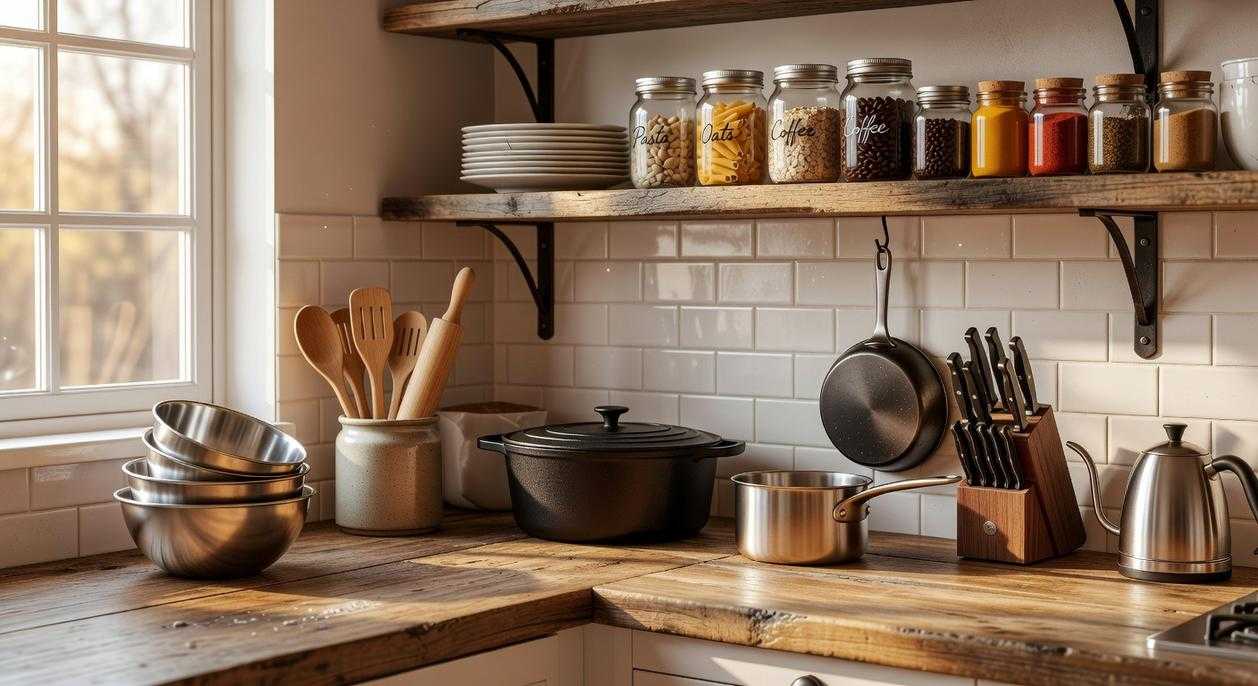
A nesting set of mixing bowls in stainless steel or glass is non-negotiable in my kitchen tools essentials lineup. Small bowl for whisking a single egg, medium for pancake batter, large for tossing salad—versatility wins every time.
Finally, whisks and spatulas: the dynamic duo. A balloon whisk incorporates air beautifully into batters and creams. A silicone spatula scrapes every last bit, folds gently, and stirs without bruising ingredients. Leave no streak behind—that’s my rule.
Beyond the Basics: Tools for Texture and Refinement
Mastering texture starts with choosing the right tool—and that’s where many home cooks level up their kitchen tools essentials.
Vegetable Peeler: There are two main styles. A swivel peeler has a blade that pivots, adjusting to bumps and curves (great for potatoes). A Y-peeler has a horizontal blade, making it ideal for long, straight vegetables like carrots and zucchini. Because it pulls downward smoothly, it often wastes less flesh. The benefit? Faster prep and more uniform cuts—small details that elevate presentation. (Think of it as the difference between a rough draft and a polished edit.)
Box Grater: This four-sided workhorse earns its counter space. The coarse side shreds cheese; the fine side handles hard cheeses and aromatics like garlic. The zesting side lifts citrus oils for brightness, while the slicing side creates even vegetable slices. As a result, you control melt, texture, and flavor release—key elements in how to balance nutrition and flavor in home cooking (https://flensutenol.com/how-to-balance-nutrition-and-flavor-in-home-cooking/).
Colander vs. Fine-Mesh Sieve: A colander drains pasta or washes produce. A fine-mesh sieve—meaning tightly woven metal mesh—handles delicate tasks like rinsing quinoa or straining sauces silky-smooth. Pro tip: strain gravies twice for restaurant-level refinement.
Upgrade your kitchen tools essentials with three small power players. Kitchen shears aren’t glorified scissors; chefs use them to snip herbs straight into simmering sauce, trim excess fat, and spatchcock chickens for faster roasting—a technique Serious Eats tests show cuts cook time by up to 25%. Bench scrapers streamline prep: in culinary schools, students are taught to transfer diced onions in one sweep, reducing board-to-pan loss and cross-contamination (USDA food safety guidelines stress minimizing contact surfaces). A handheld citrus juicer delivers maximum extraction, yielding measurably more juice while trapping bitter pith and seeds. Proof beats guesswork in home kitchens everywhere.
Confidence in the kitchen rarely comes from owning every shiny gadget. It comes from mastering a tight set of tools that handle almost everything you cook. Think of this as your kitchen tools essentials checklist—the 90% solution.
Start with:
- A SHARP chef’s knife for precise slicing
- A sturdy cutting board
- Nested mixing bowls
- A reliable skillet
A sharp knife reduces prep time and accidents (dull blades slip). Mixing bowls streamline prep and cleanup. Assess what you own. Upgrade one weak link this week. SMALL improvements create BIG momentum, and better workflow makes cooking genuinely enjoyable. Right now in your kitchen.
Bring Bold Flavor Into Your Kitchen Today
You came here looking for practical ways to elevate your cooking with smarter techniques, creative ingredient pairings, and flavor-boosting strategies—and now you have them. From understanding food fundamentals to experimenting with global inspirations and fusion techniques, you’re better equipped to turn everyday meals into unforgettable experiences.
But let’s be honest: the biggest frustration in the kitchen isn’t a lack of recipes. It’s bland results, wasted ingredients, and tools that don’t work the way you need them to. When your flavors fall flat or your prep feels chaotic, cooking becomes a chore instead of a creative outlet.
That’s why your next move matters. Start refining your approach today—upgrade your kitchen tools essentials, experiment with one new flavor combination this week, and apply the enhancement hacks you’ve just learned. Small shifts create dramatic improvements on the plate.
Thousands of passionate home cooks trust our insights to simplify techniques and amplify flavor. Now it’s your turn. Put these strategies into action, transform your next meal, and taste the difference for yourself.